Interview: Catching up with Fujita, Celebrating 10 Years of Wotakoi
Interview: Catching up with Fujita, Celebrating 10 Years of Wotakoi
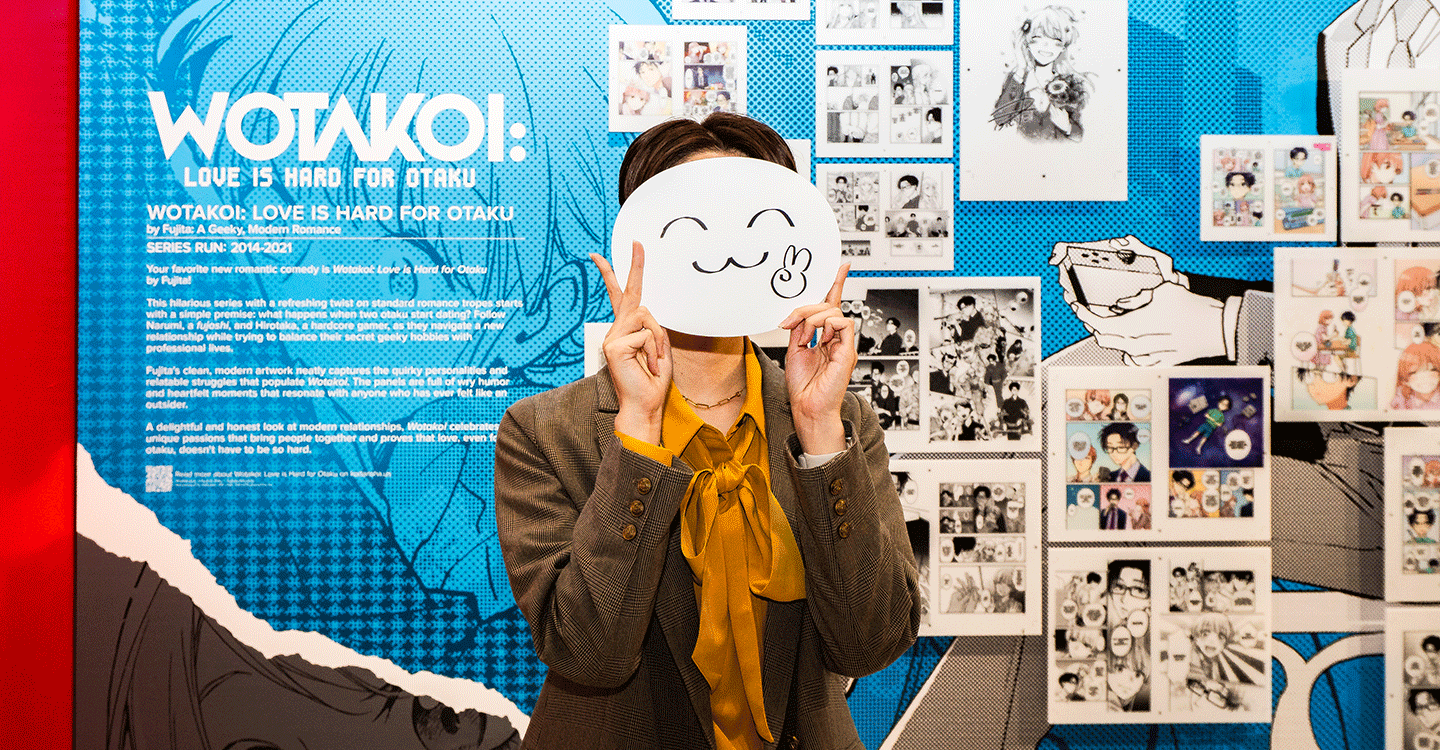
In October of this year, during her visit to the Kodansha House pop-up in New York, Wotakoi: Love Is Hard for Otaku author Fujita spoke with the English edition series editor Vanessa Tenazas about the bestselling romance series’ 10-year milestone, some behind-the-scenes snippets, and beyond.
Translation by Misaki C. Kido.
This interview has been translated and edited for clarity.
Marking Wotakoi’s 10th Anniversary
Editor: Let’s start with the big milestone—it’s been 10 years since Wotakoi: Love Is Hard for Otaku made its debut! How does it feel celebrating this anniversary?
Fujita: It’s brutal to think that it’s already been 10 years. In some ways it feels like such a long time, but in other ways it feels like it went by in a flash.
Editor: It’s also been a few years since Wotakoi officially ended. Do you ever miss working on it?
Fujita: I certainly do miss working on Wotakoi, but at the same time I feel like I still need to take my time and rest (lol). When I look back on when the series was in full swing, I remember it as such a glorious time in my career. Like, wow, I did that, and I can’t help but be impressed with my past self for pulling that off (lol).
Editor: Now, for readers discovering Wotakoi for the first time in 2025, what do you hope they focus on or notice about it?
 Wotakoi: Love Is Hard for Otaku 1, p. 11
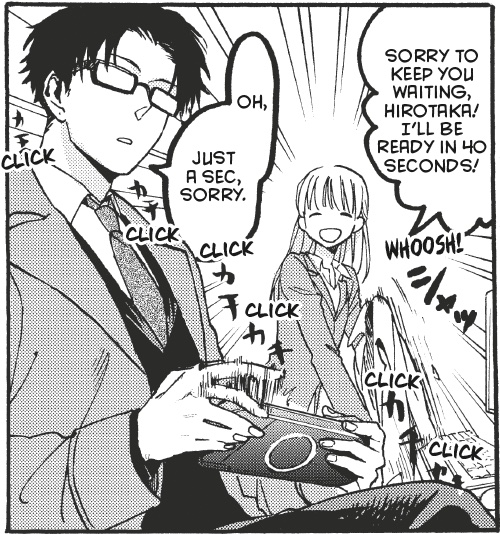
Fujita: This manga was written 10 years ago, and I wrote it with the trends of the time in mind. There might be some aspects that still resonate in the same way even now, but a lot of things probably feel different from what’s popular these days, almost like a generational gap, in a way. You might be like, “whoa they’re playing Monster Hunter on PSP” and realize that was cutting-edge tech at the time.
Editor: Oh wow, that’s so true!
Fujita: Exactly. So, I think you can kind of enjoy reading it as a glimpse into what it was like to be an otaku at that time and appreciate how fast times can change.
Editor: Thinking back, if you could send a message to your past self when first starting the series, what would you—
Fujita: “Meet your deadlines! Otherwise, you’re going to cause a great deal of trouble for everyone around you!”
Editor: Ha!
Fujita: Oh, and “If you can’t meet your deadlines, you’re trash!!” (lol)
Editor: That’s an important life lesson!
Fujita: Yes, I think it’s a good one that could apply to any working adult.
[Fujita’s editor was noticeably silent for this question.]
Developing the series:
Editor: Now, we’d like to talk about developing the series itself. Wotakoi has been a huge hit with Western audiences, particularly in America. Did the overseas success ever influence how you approached the story?
Fujita: It didn’t quite happen in that order, really—I didn’t have an international audience in mind when I started this series, I was just writing about things that I really like. And somehow that went over well in the US. It struck me as such a strange phenomenon, to the point where I would like to ask what made it such a hit here.
Editor: I think it’s possible there were readers who saw themselves reflected in the story and characters.
Fujita: In that case, maybe the fandom culture in Japan and overseas are not so different. Our passions and the heart we put into them may be quite similar regardless of where you’re from. So, while there wasn’t any direct influence on the story’s development, maybe that realization is something that came out of it.
Editor: Thank you for sharing that! Moving on to the characters, the three couples in Wotakoi each demonstrated a different approach to romance. Was that something you planned to incorporate from the beginning?
 Wotakoi: Love Is Hard for Otaku 4, p.247
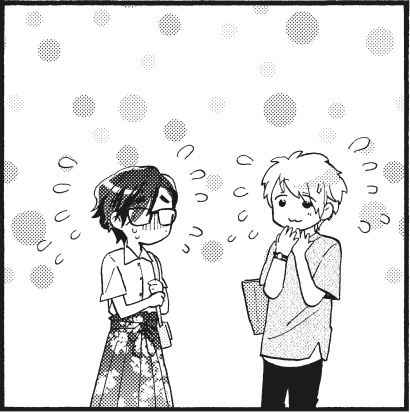
Fujita: Oh, no, no, no (lol). In the beginning, I was very much focused on the two main characters [Narumi and Hirotaka], but as I continued to flesh out the story, I would think things like, “Oh, they could use a senpai” or “oh, he should have a younger brother”, and things evolved from there. Naoya and Ko especially were not intended to be a couple at first. In the beginning, I thought it might be enough for them to just be friends, but as I was working on the series, I started to feel differently about it. Like, maybe that wasn’t enough for them, especially considering how Naoya’s character and personality developed and how his feelings grew. At some point friendship didn’t seem like the ultimate form of their relationship, and it was okay for there to be something more. This was a result of working on the series for a really long time, and I think I owe it to fans for watching over the characters and their personal growth.
Editor: I do feel like the relationship between Naoya and Ko developed very naturally from the reader’s perspective.
Fujita: That’s how it felt for me, too, like they were falling in love in real time. That couple did have the toughest time getting into their romance, after all.
Editor: The embodiment of “love is hard for otaku”!
Editor: Moving on, one of Wotakoi’s unique charms was its deep exploration of otaku and online subcultures. Did you ever have to do any special research on certain otaku terms or concepts that appeared in the story?
 Wotakoi: Love Is Hard for Otaku 2, p.186
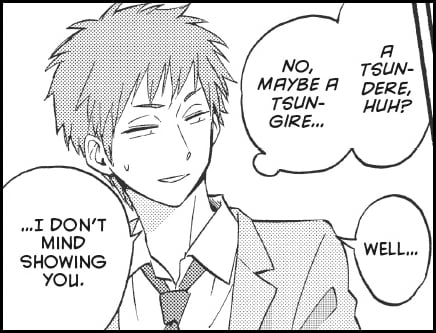
Fujita: I have a lot of otaku friends, so I was always kind of in tune with the popular slang they used on the Internet and on social media. I would try to pick up on things naturally in the wild, but then I would confirm with my friends if my understanding or usage of a term is actually correct or not. I would also research a term’s origin sometimes—those sorts of things.
Editor: The localization went through a similar process, so it’s good to hear that that deep research was meaningful. Speaking of which, one interesting detail about Wotakoi is how nearly every page had a clever subtitle at the bottom relating to the joke or scene on the page. Was it ever challenging coming up with those?
Fujita: About part way through the series, my editor actually started coming up with those to save time for me working on the manuscript. I’d come up with the idea, the editor would massage it, and then it goes into the final draft.
Editor: I see! This was also another part of the localization process that was quite challenging (lol).
Fujita: Some of those subtitles reference some really deep otaku subculture subjects, to the point where I’m honestly not sure if people elsewhere or of a younger generation would even understand them (lol). For the funnier pages, the subtitles added a little bit of comedic flair, but when things got really serious, we would leave them out so as not to clash with the mood of the scene. In the end, they were just fun, supplemental captions.
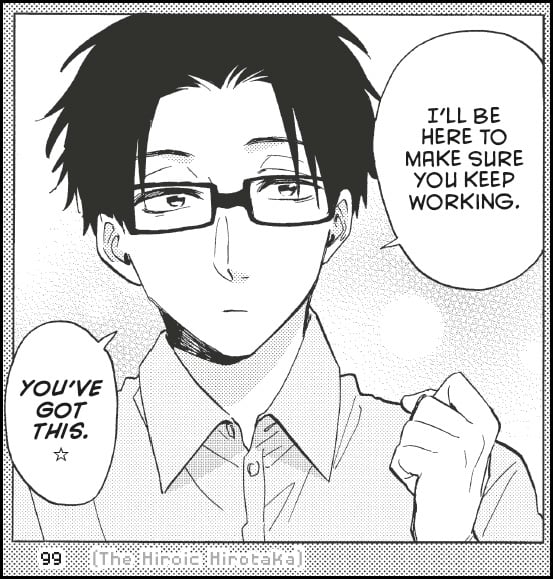 Wotakoi: Love Is Hard for Otaku 4, p. 99
Editor: It was honestly sometimes hard to tell when something was a reference or not.
Fujita: Since my editor Suzuki-san kind of took over adding those partway, there were even times when I wasn’t sure myself what the original reference was and had to do my own research (lol). Suzuki-san is more knowledgeable about male-oriented stuff like Baki and Gundam, so while he did try to keep it universal, there were times when that bias showed a little. Taking a closer look at them might even be another way to enjoy the series in a new light.
Wotakoi Beyond 2025
Editor: Next, let’s talk a little about after 2025. What do you imagine the characters’ lives will be like 10 years from now?
Fujita: Honestly, I don’t want to think about it—because that would mean imagining Narumi and company as middle-aged ladies, and that would just make me feel old (lol). It would be great to think about living the next ten years as carefree otaku, but in that time family or household issues, stress from work, etc., would come up. These characters do have partners they love and fandoms they’re passionate about, though, so they’ll probably know how to refresh themselves and do selfcare with their partners a little better than the typical corporate drone. Even though life can get tough, I would hope they are all able to lead fun and fulfilling lives, in spite of any challenges they might face.
Editor: Aw, I think that’s a nice way to think about it.
Fujita: Also, I do want to add that I think Hanako would be the type of parent to cosplay together with their kid (lol).
Editor: I could definitely see that! Now, is there anything you’d like to say to fans who might discover Wotakoi for the first time far into the future?
Fujita: Part of me wonders if readers in younger generations will even enjoy this manga (lol). If they do, that could mean that there’s a universal theme or aspect that transcends generations–it could be that, regardless of the times you live in or what may be trending, there will always be people dedicated to their hobbies and passions. The important thing is following your heart and being passionate about the things you like. And if that’s something that resonates with you, I hope you’ll cherish that feeling of caring deeply about something.
Editor: Now, to end us on a fun note, I wanted to go back to something you brought up earlier— what do you think Hanako’s next cosplay project is?
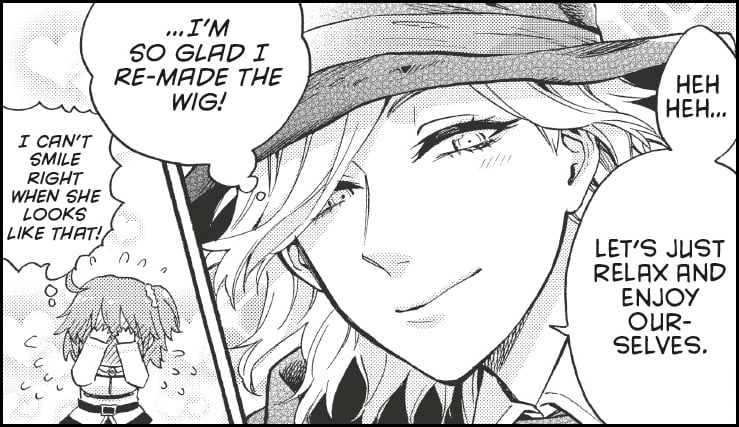 Wotakoi: Love Is Hard for Otaku 3, p. 118
Fujita: Hanako is the type to cosplay a character she likes from something that’s currently popular. Right now that might be…Hazbin Hotel? It’s quite popular in Japan with season 2 coming up. If I had to say, maybe Alastor? That might be the most mainstream thing in that fandom.
Editor: Oh, wow! In that case, what would Hanako’s kid cosplay as?
Fujita: The little one would be Niffty! So, you’d have Alastor carrying around a little Niffty at his hip. All that said, there were a few times where Hanako’s cosplays were risky to include in the story. I sometimes didn’t get to put exactly what I wanted into the main story due to rights issues—we did have to be careful about that.
Editor: Hanako is a very skilled cosplayer, so it doesn’t help anything she wears would be clearly recognizable (lol). Well, that concludes our questions for today! Was there anything else you wanted to share with fans reading this article?
Fujita: Hmm…do we know if a lot of fans here discovered Wotakoi through the anime? I sort of got the feeling that most people discovered it through that.
Editor: It could be—it certainly helped, but I couldn’t be completely certain if that’s true for most people.
Fujita: I see. Well, I really like watching international fans’ reactions to the Wotakoi anime, for example, because it feels so real to me, and it’s not something I see much among Japanese fans. International audiences don’t hesitate to express their love for something, and I’d love to continue seeing that sort of passion in the future.
In some ways, when you look at things like that from the perspective of a typical Japanese person, it sort of feels like other cultures are a little more advanced when it comes to being open and straightforward. In Japan, it’s not uncommon to fear being ostracized or bullied due to being different or going against the grain. It’s a unique and concerning cultural practice that might be improved by looking at the openness of other cultures—like, it’s okay to like what you like, to be open about your passions, and not be embarrassed by them. It’s this conflict that forms the basis for Narumi’s personal arc [of not wanting to reveal her otaku identity].
Now, in these last 10 years, thanks to some overseas influence, young people in Japan today are a little more aware of the importance of that openness, which means Narumi’s arc may not come across as clearly to newer readers—younger readers may even wonder what she has to be embarrassed about—and in a way, her storyline not making sense anymore can be seen as a sign of cultural progress. At the same time, I think it’s still important to prioritize an individual’s feelings—just because you personally don’t find it embarrassing, forcing someone else to reveal a part of themselves they are uncomfortable with isn’t quite right either. Watching over someone as they move at their own pace is the sort of thing I had in mind when writing Wotakoi.
And so, for anyone who might be confused as to the relevance of Narumi’s anxiety around her otaku identity, I hope you’ll consider that idea.
Editor: I sincerely hope that will come across to readers new and old—that it’s okay to open up about things you might be insecure about at your own pace, in a safe space. Even ten years from now, I think people will find courage in that. Thank you so much for sharing!
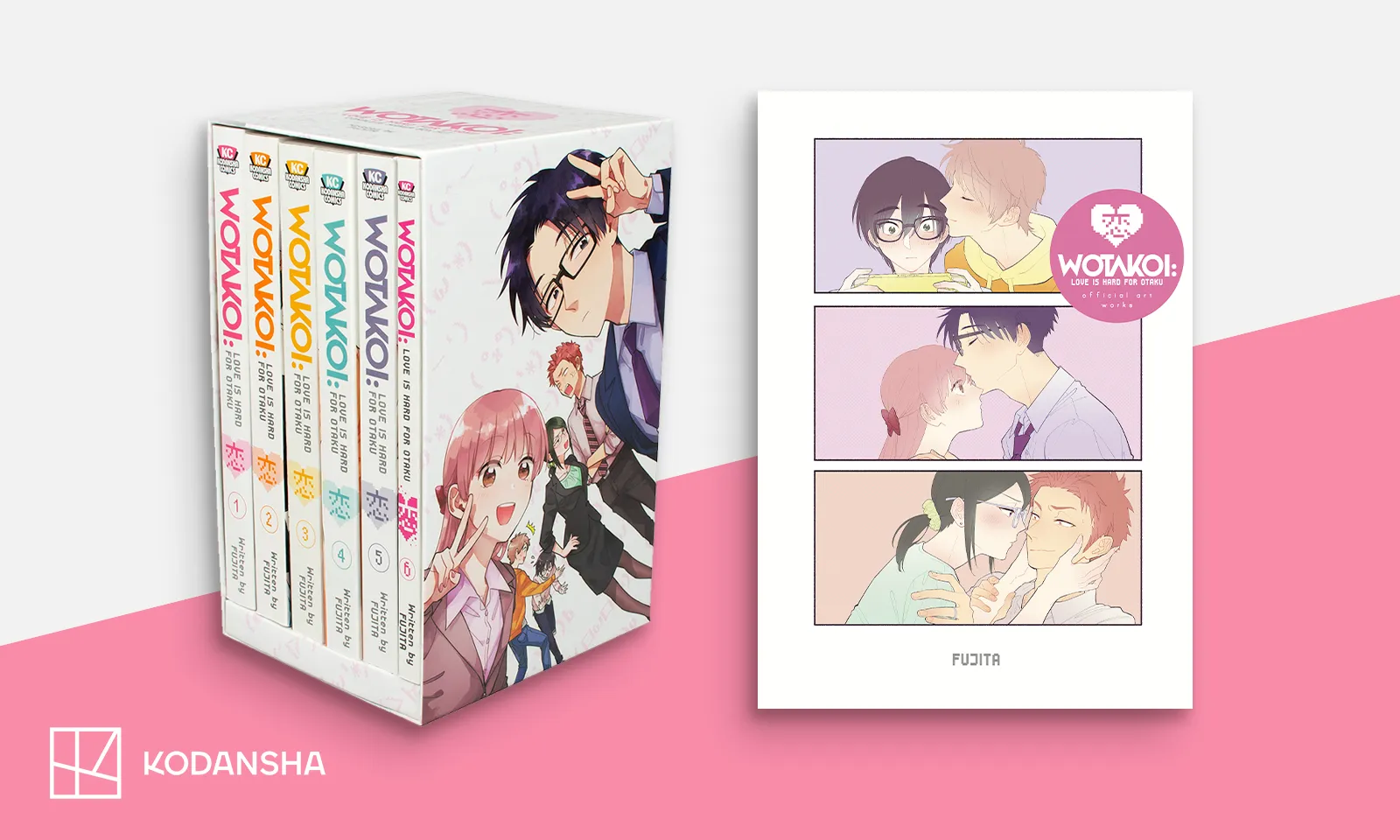
Want to experience the entire series in one amazing set? Get the Wotakoi: Love Is Hard for Otaku Complete Manga Box Set, available now from Kodansha and full of goodies no Wotakoi fan can miss.
Are you a die-hard fan and want to go beyond the story? Be sure to check out the Wotakoi: Love is Hard for Otaku Official Art Works, featuring a collection of unique illustrations and full color art from the entire series.
#Kodansha_Wotakoi Contest
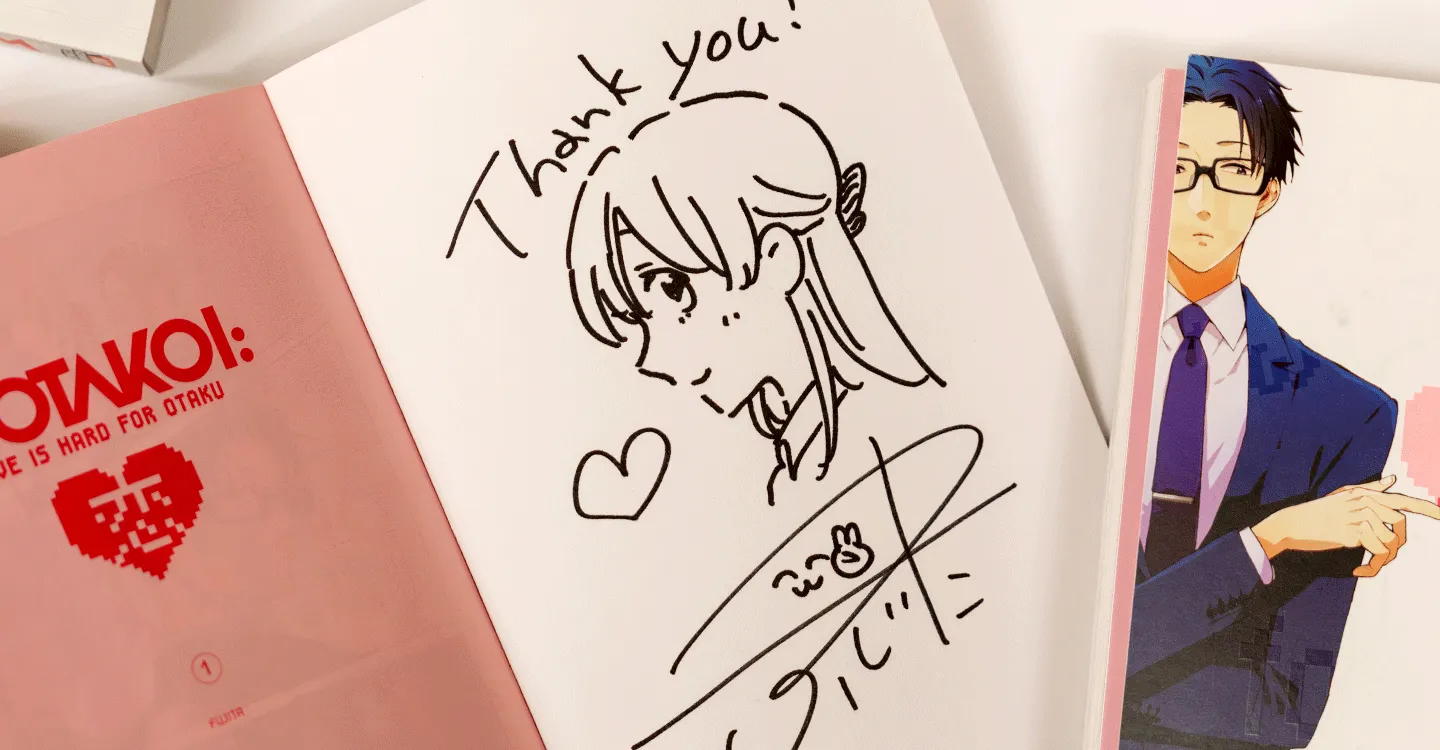
Did you hear about Fujita visit to Kodansha House in 2025? It was a truly special occasion!
Now’s your chance to share your love for Wotakoi: Love is Hard for Otaku and win an amazing prize!
Share your love for Wotakoi: Love is Hard for Otaku with the hashtag #Kodansha_Wotakoi on social media for a chance to win a special prize from the author, Fujita!
How to Win a Signed Copy of Wotakoi: Love is Hard for Otaku, Volume 1!
Step 1. Take a picture, video, or write a comment to express your love for Wotakoi: Love is Hard for Otaku.
Step 2. Post it on your X (Twitter), Facebook, Instagram, or TikTok with the hashtag #Kodansha_Wotakoi.
Step 3. Fill out this entry form by December 19, 2025 11:59 PM PT and include the link to your post.
We will contact one lucky fan via the email address provided in this survey (so please provide accurate information).
The winner will receive a signed copy of Volume 1 of Wotakoi: Love is Hard for Otaku by the author, Fujita.
Good luck!