Interview: Looking back with The Magnificent Bastard: The Legend of Keiji’s original editor, Nobuhiko Horie
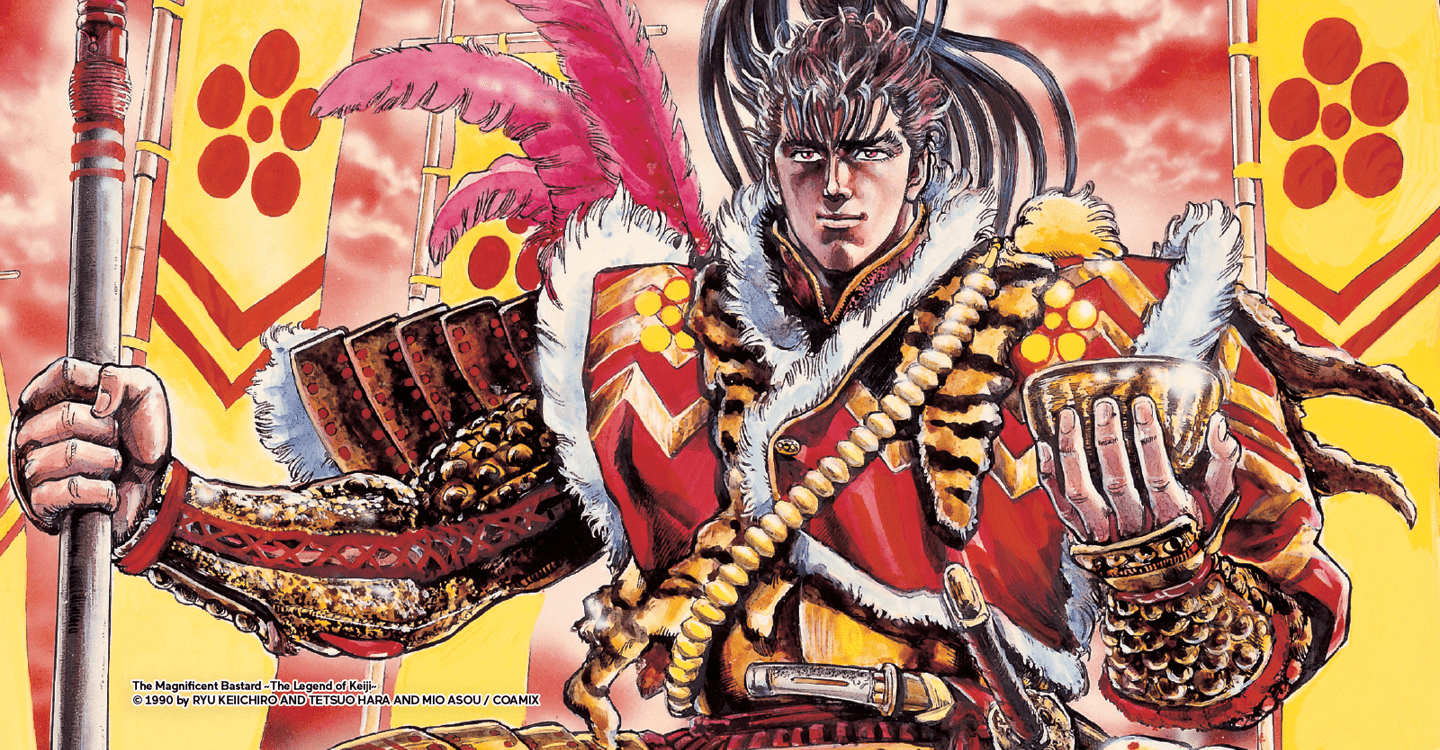
Dear readers! We present to you a special interview with Nobuhiko Horie, president of COAMIX and the legendary former editor-in-chief of Shueisha’s Weekly Shonen JUMP who, as editor, launched Hana no Keiji~Beyond the Clouds~ a.k.a. The Magnificent Bastard: The Legend of Keiji .

If you’d like to explore the exciting story of The Magnificent Bastard: The Legend of Keiji —the historical action drama from Keiichiro Ryu, Mio Aso and Tetsuo Hara ( Fist of the North Star ) you can read the full first chapter here .
Translation by Daniel Joseph.
This interview was conducted in writing and been translated and edited for clarity.
Kodansha: With the release of Hana no Keiji in the US as The Magnificent Bastard: The Legend of Keiji , could you please share your thoughts on the series’ history, as well as your expectations for American and international readers?
Horie: Understanding the past begins with understanding the social norms of a given era. This work is set in the late 1500s and early 1600s, so we tried to reflect the mindset of that era as much as possible. The period in question is known as the era of “gekokujo,” the low overcoming the high, which could even be freely translated as “democracy.” It was an era when commoners could become kings, and when the Japanese people behaved most freely and authentically, the latter perhaps best embodied in the dynamism of the warrior class. As a representative example I chose to depict Keiji Maeda, who was known as a “kabukimono,” a name for those with outlandish tastes and outsized behavior. In any event, I hope this book will help international readers learn more about Japan.
Kodansha: When Hana no Keiji was serialized in Weekly Shonen JUMP , what message or theme did you most want to convey to readers through the story and characters?
Horie: The theme of the work was centered around “gi,” or righteousness.
Righteousness means living beautifully in relation to yourself. You could also just call it a “cool way of life.” JUMP ‘s editorial policy at the time was “friendship,” “effort,” and “victory.” These are eternal themes for boys which, pursued to their fullest, are sublimated into “coolness.”
Kodansha: When creating Hana no Keiji , how did you incorporate the worldview and characters of Keiichiro Ryu (1923-1989), author of Ichimuan Furyuki , the novel that inspired the manga? What were the key points and strategies you kept in mind when soliciting the art from Tetsuo Hara, illustrator of Fist of the North Star ?
Horie: The flower (“hana”) of Hana no Keiji refers to cherry blossoms. I wanted the title to evoke the idea of falling as beautifully and gallantly as the cherry blossoms do. The final title was chosen by Ryu-sensei on his hospital bed shortly before he passed away. I presented several ideas, and he readily agreed to Hana no Keiji . But he also said, “I love clouds. Please include clouds somewhere,” so I added the subtitle Beyond the Clouds .
In Hara-sensei’s Fist of the North Star , the characters rarely smile. I suggested that Keiji Maeda’s breezy smile be the most appealing aspect of this work, and he endeavored to oblige.
Kodansha: When it came to character design and the characters’ personalities, what were the points you paid particular attention to and the creative challenges you faced?
Horie: One of the basic principles of writing period dramas is that you mustn’t stray too far from historical fact. To that end, you have to research the customs and sensibilities of the time. For Keiji , I began by reading hundreds of history books and ancient documents. The Sengoku period* featured a plethora of concepts of freedom, many of which are more relevant to the present day than they were to the preceding Edo period*, so I did my best to reflect that as much as possible.
*Sengoku period = A turbulent era of civil war spanning the late 15th and 16th centuries.
*Edo period = An era of relative peace stretching from the beginning of the 17th century to the mid-1800s, centered around the new capital of Edo (present day Tokyo).
Kodansha: With the release in English of The Magnificent Bastard: The Legend of Keiji , is there anything else you’d like to say to your American and international readers?
Horie: This work is packed with what Japanese people consider to be “cool.” I think—I hope—people will be able relate to it, even if they’re not from the same country.
Kodansha: Thank you so much!
Manga Giveaway!
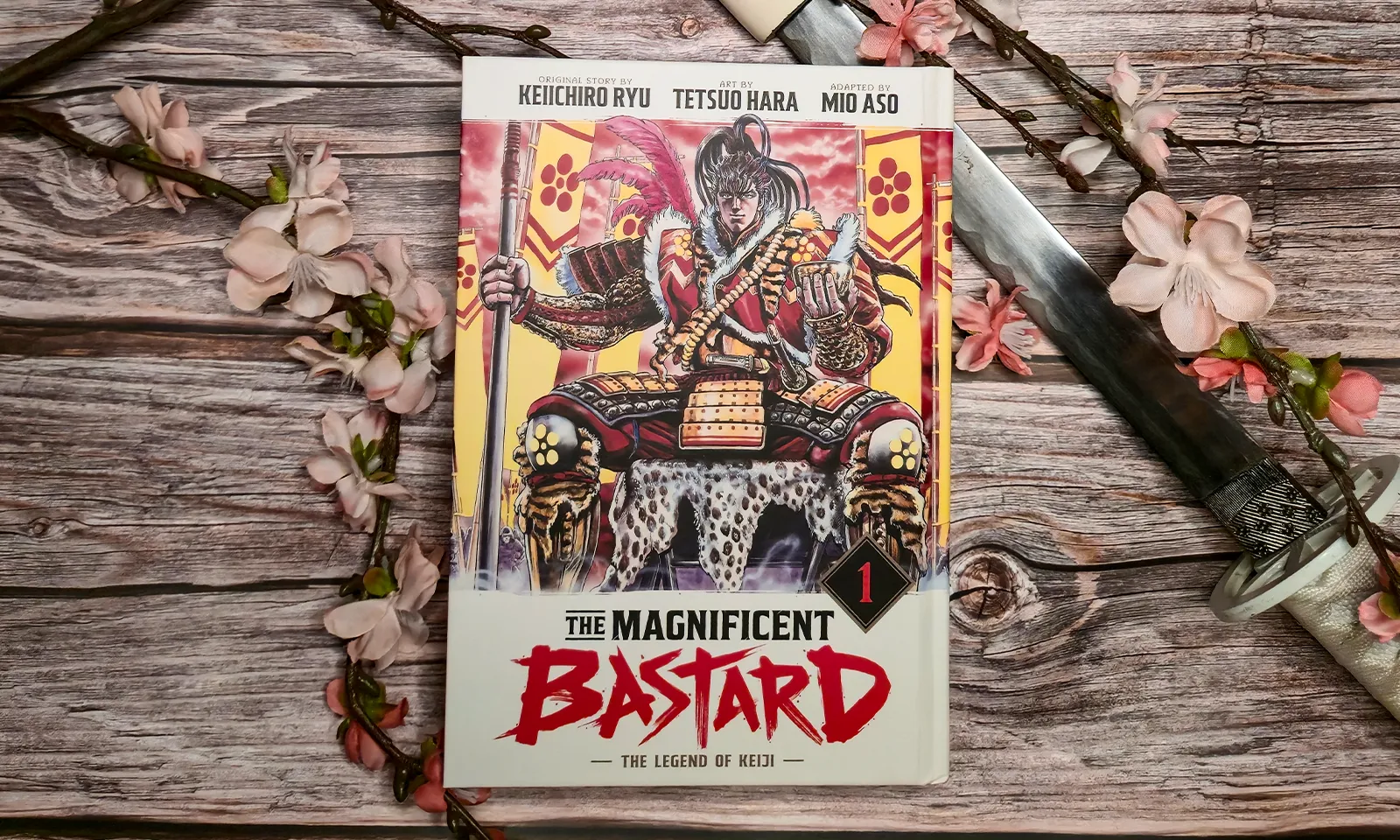
To celebrate this exclusive interview with Nobuhiko Horie, we are giving away the The Magnificent Bastard: The Legend of Keiji , Volume 1.
To participate, follow the instructions on our official giveaway posts where it asks you to like, share and follow us on either of our social media channel below:
The giveaway concludes on January 27th, 2026, at 15:00 PM ET.